
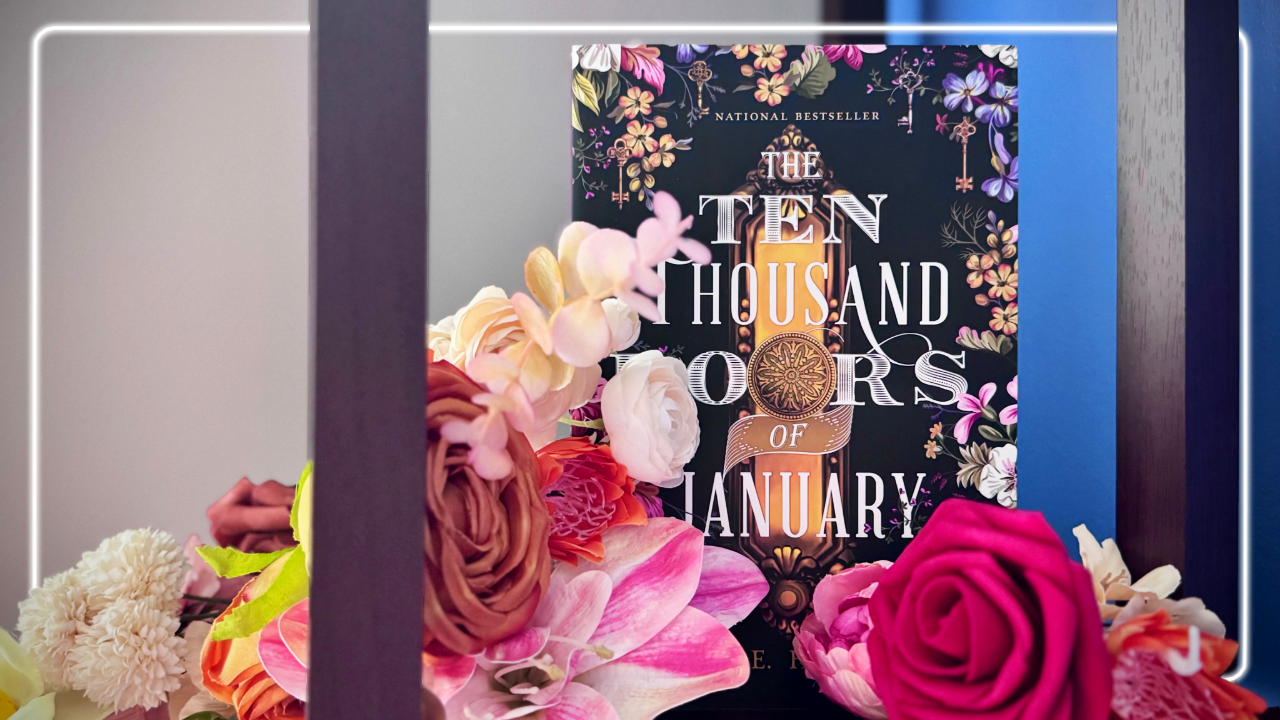
January is an in-between time of year. It’s in the name, with the god of beginnings reminding us to keep the past in view while planning for the future. It’s a month full of possibility, tinged with nostalgia and memory, the winter sun illuminating faint visions of the perfect year ahead. Of course, that vision will inevitably grow and change as it comes to life – but in the weak light of January, everything seems possible.
Fitting, then, to close out the month with a book full of possibilities. While I readily admit I picked up The Ten Thousand Doors of January on a whim, it feels like a perfect encapsulation of the regrets and hopes that fill its namesake. Everything from tone to plot to characters are a perfect match for this in-between month.
A well-worn opening…
Let’s start at the beginning. The Ten Thousand Doors of Januaryy is the story of January Scaller, daughter of Ian, at the turn of the 20th century. Her father adventures around the world, finding mysterious artifacts for the wealthy and mysterious Mr. Locke, who takes care of January. Every so often, she gets to travel with Mr. Locke, and one day she happens across a strange door in a field, which takes her to another world. She returns to some strange questions, but after some punishment learns to hide her experiences and curiosity and to be a “good girl”. She whiles away the time with her dog, a companion her father sent looking for her, and presents that mysteriously appear in a chest whenever she most needs them.
So far, so standard, you may think. And from a sheer plot standpoint, you’d be right. January’s early story parallels so many we’ve read before – a young girl, alone in the world, just her dog and a single friend for company. (In fact, the lone friend is generous!) An inciting incident obviously awaits.
But despite how many times I’ve read this story before, in The Ten Thousand Doors of January, it feels classic, never trite. Alix Harrow does a masterful job with tone and voice, making this feel like a modern combination of Narnia and The Little Princess or The Secret Garden. She combines plentiful historical references – to anchor the story and show the passage of time – with the perfect tone, at times wondering and at times stuck, yearning for adventure. The earliest part of this story feels like slipping into an old hoodie at the start of a road trip – comforting, nostalgic, yet on the verge of a new adventure.
…and a call worth answering
A great beginning is well and good, but can Harrow stick the landing? After all, it’s easy to set up a mysterious world and an under-utilized protagonist. It’s harder to then create enough mystery to make the world worth exploring and enough challenge and purpose to make the call meaningful. Plus, you need a character with enough agency that she feels worth rooting for, but still enough room to grow.
Harrow does all that and more. In short order, she establishes a mysterious society that opposes January’s freedom and locks her up in an asylum. The asylum is exactly as horrible as you’d expect – sedatives, restraints, creepy doctors. While there, she finishes a mysterious book that explains the secrets of her world. And it’s just in time, as she’s able to use what she’s learned to make an escape attempt.
It’s here that I really fell in love with Harrow’s storytelling. She easily switches between the early-story narrator, tense and waiting, to the mid-story tone, full of visceral detail, and again to the book January reads (personal, academic, nostalgic). In doing so, she brings us along on January’s whipsawing emotional journey. Yet she maintains a sense of possibility, of the big wide world, even through the tense moments.
I want to pause and highlight how unique this is. I love modern fantasy, but most of it keeps the reader at a distance, observing rather than participating. It is rare that a book makes me want to join the hero and explorebefore the magic disappears. Middle-grade fantasy is full of this feeling. But adult fantasy novels often lose it, instead getting wrapped in complex world building and realistic politics and nuanced character stories. Harrow keeps The Ten Thousand Doors of January simple – and extremely effective.
A book about Doors…
Part of Harrow’s ability to keep that sense of exploration is in the core magic system / story arc.
The Ten Thousand Doors of January is a Doors Book. By which I mean, it follows in a long line of stories that explores the ramifications of a multiverse accessible via doors / portals / some other kind of magical MacGuffin. (Books that fall in this genre: The Book of Doors; Inkheart; Thursday Next; even The Chronicles of Narnia has elements of this.) Typically, Door Books feature at least two parties, perhaps more, fighting for control of the doors. The protagonists generally want the doors open and accessible; the antagonists often want to limit or even end access altogether. As a result, Doors Books tend to thematically value change, diversity, intermingling of ideas, and open access.
By that yardstick, The Ten Thousand Doors of January is 100% a Doors Book. In that middle section, January learns that her world is connected to an open multiverse via a series of mysterious doors. There doesn’t seem to be a ton of rhyme or reason to why the doors exists, where they pop up, or to where they connect. What’s important is that they can create “leakage” between worlds. That is, people, ideas, and even magical artifacts passing through that can inspire imagination – or unhinge the entire social order. January is set against a group that wants to preserve that order – and is willing to go to great lengths to do so. This is obviously bad, because who decided that these (elitist, old, rich, white, American) dudes should get to shut down everyday randomness and inspiration?
…and about keeping them open
All of this to say, the book has one idea it wants to explore – what happens when you cut off passage between worlds? How far should we go to fight to keep those worlds open? What are the benefits we get from open doors?
It’s a simple idea – but a powerful one, and one that resonates through the years. I find it funny that most contemporary reviewers highlight the idea of imagination in this book. Imagination is certainly valued, and the book sets itself against those who want strict order in place of organic, lived beauty.
But to me, in this moment, The Ten Thousand Doors of January is a book about immigration. Imagination and creative inspiration are simply byproducts of societal mingling; but the real risk to the antagonists is the unpredictable social evolution they inspire. The antagonists in this story want to control the world precisely and perfectly, to remake it under their control. And so their biggest fear is cultural randomization from a giant multiverse.
Alix Harrow was an academic historian, and it feels like no coincidence that she set The Ten Thousand Doors of January during the Great Wave of American migration. In the first two decades of the 20th century, over 14 million immigrants arrived on American shores, bringing their folklore and traditions and social expectations with them. The pushback from “home-grown” Americans resulted in some of the most restrictive immigration laws to-date.
The Ten Thousand Doors of January abstracts that concern and makes it fantastical – and therefore readable. And it lays out a clear perspective – doors should remain open, the world should remain explorable, and the best life is one spent learning from difference and diversity. Simple, yes, but inspiring, and one that creates in its reader its own call to adventure.
A Door Book to cozy up with
The Ten Thousand Doors of January is a story that loves both stories and people. Tonally, it’s perfectly tuned to its plot, creating a sense of immersion and adventure. That tone blends perfectly with a simple yet worthwhile theme, full of layers to unpack, woven through the characters, plot, and world. It’s a perfectly cohesive package that made me fall through the pages straight into the world of January Scaller. It’s another perfect example of a book that’s cozy in effect rather than aesthetic, and I’d recommend it to anyone looking for that middle-school reading high that left you looking for portals in your backyard.
I can’t believe we’re almost through January already – it’s been a big reading month. We’ve got a Big Shelf Upgrade coming here at the Owlet’s nest and you can likely expect some musings about that eventually, plus drabbles about some recent travels and associated reading.
Until next time – stay cozy, and stay curious!
